
What Is a Referral Partner?
A referral partner is a professional who serves the same clients you do, in a non-competing capacity, and who actively sends you qualified client introductions — while you do the same for them. Unlike a casual networking contact or a professional acquaintance, a referral partner is someone you have built enough trust with that you confidently recommend each other to your respective clients. The relationship is intentional, reciprocal, and — when done well — one of the most reliable sources of new business any professional can develop.
The concept is simple, but most professionals never formalize it. They rely on a vague hope that people in their network will remember them when the right client comes along. That approach is passive, unpredictable, and usually disappointing. A true referral partnership is active. Both parties understand each other's ideal client profile, communicate regularly, and look for specific opportunities to make introductions. It is the difference between networking and referral networking — and the difference in results is enormous.
Examples of Referral Partnerships by Profession
The best referral partnerships form between professionals who share a client base but provide entirely different services. Here are the most common and productive pairings across industries.
Attorneys and CPAs
This is one of the most natural referral partnerships in professional services. A CPA sees a client's complete financial picture every year during tax season. When they identify estate planning needs, business formation questions, or potential legal exposure, they need a trusted attorney to send that client to. In return, attorneys frequently encounter clients who need tax advice, bookkeeping services, or financial planning beyond the scope of legal counsel. An estate planning attorney with three strong CPA partners can generate a steady flow of high-net-worth clients without spending a dollar on advertising.
Real Estate Agents and Mortgage Lenders
A real estate agent works with buyers who need financing, and a mortgage lender works with borrowers who need homes. The overlap is obvious, but the best partnerships go beyond simple hand-offs. A strong referral partnership between a real estate agent and a mortgage lender means the lender pre-qualifies the agent's buyers quickly, and the agent sends the lender clients who are serious and ready to act. Both parties benefit from faster closings, happier clients, and a reputation for providing a seamless experience.
Financial Advisors and Estate Planning Attorneys
A financial advisor managing a client's investment portfolio will inevitably encounter questions about trusts, wills, power of attorney, and asset protection. Rather than trying to answer those questions (and risking unauthorized practice of law), the advisor refers the client to a trusted estate planning attorney. The attorney, in turn, encounters clients who need investment management, retirement planning, or insurance products. This is a referral partnership that can generate six-figure revenue for both parties when maintained with consistency.
Insurance Agents and Business Consultants
Insurance professionals — whether they specialize in commercial, life, or benefits insurance — serve business owners who also need strategic guidance, HR consulting, IT support, and legal counsel. A well-connected insurance agent can become a hub for referrals to multiple professionals, and in return, those professionals send their business-owner clients to the insurance agent when coverage needs arise. The key is positioning yourself not as a salesperson but as a trusted advisor who connects people with the right resources.
How to Identify Your Ideal Referral Partners
Finding the right referral partners starts with understanding your own practice. Ask yourself three questions:
Who else serves my ideal client? Make a list of every type of professional your best clients interact with. If you are a family law attorney, that list might include financial planners, therapists, real estate agents, and CPAs. If you are a commercial real estate broker, it might include business attorneys, commercial lenders, and architects.
Who do my clients ask me about? Pay attention to the questions your clients ask that fall outside your expertise. "Do you know a good accountant?" is not just a question — it is a signal that you need a CPA referral partner. Every time you say "I am not sure, let me think about it," you are missing a referral opportunity in both directions.
Who is already sending me clients — even informally? Look at your last 20 new clients and identify where each one came from. You may find that one or two professionals are already referring to you without a formal arrangement. Those people are your highest-priority referral partner candidates because the trust already exists. Formalizing the relationship — by sitting down, discussing ideal clients, and committing to regular communication — can multiply the referrals you are already receiving.
How to Approach Someone About a Referral Partnership
The approach matters. You cannot walk up to someone at a networking event and say, "We should be referral partners." That feels transactional and presumptuous. Instead, the most effective approach unfolds over time and follows a natural progression.
Step 1: Make the first introduction. Before you ask for anything, give first. If you know someone who could benefit from the other professional's services, make the introduction. This demonstrates that you are a giver, not a taker, and it creates a natural sense of reciprocity.
Step 2: Schedule a one-on-one meeting. After you have had at least one or two positive interactions — whether at an event, through a shared client, or via a mutual connection — invite them for coffee or lunch. The goal of this meeting is to learn about their practice in detail: who they serve, what problems they solve, and what kind of client is ideal for them.
Step 3: Share your ideal client description. During the one-on-one, be specific about the clients you serve best. Do not say, "I am a financial advisor and I work with anyone who has investments." Say, "I specialize in retirement planning for business owners in South Florida who are within five years of selling their company and need to protect the proceeds." Specificity makes it easy for your partner to recognize an opportunity when it arises. For more on how to have this conversation naturally, see our guide on how to ask for business referrals.
Step 4: Follow up consistently. After the one-on-one, stay in touch. Share relevant articles. Make additional introductions when appropriate. Check in quarterly even if there is nothing specific to discuss. The professionals who maintain referral partnerships through consistent, low-pressure follow-up are the ones who receive referrals year after year.
The Referral Partner Matrix
One of the most effective tools for managing your referral partnerships is what we call the Referral Partner Matrix. It is a simple framework for organizing your professional network by two dimensions: alignment (how closely their client base overlaps with yours) and activity (how frequently referrals flow between you).
High alignment, high activity: These are your core referral partners. You share a significant client base, and referrals flow regularly. Protect these relationships at all costs. Meet with these partners quarterly, keep them updated on your practice, and never let a referral go without a thank-you.
High alignment, low activity: These are your biggest opportunities. The overlap exists, but the referrals are not flowing yet. Invest time in building these relationships. Schedule one-on-ones, give referrals first, and clarify your ideal client profiles with each other. These partnerships have the potential to become core partners with effort.
Low alignment, high activity: These are generous people who send you occasional referrals even though there is limited overlap. Thank them, reciprocate when possible, but do not invest disproportionate time here. The returns will naturally be limited.
Low alignment, low activity: These are casual contacts. Maintain the relationship but do not prioritize it for referral purposes.
Maintaining the Relationship Over Time
The hardest part of referral partnerships is not starting them — it is maintaining them. Professionals get busy. Months pass without communication. The relationship fades, and so do the referrals. Here are the practices that keep referral partnerships productive over the long term.
Schedule regular check-ins. Quarterly one-on-ones — even 20-minute phone calls — keep the relationship warm and top-of-mind. Use these check-ins to share updates on your practice, discuss recent referrals, and identify new opportunities.
Send referrals proactively. Do not wait for someone to ask. When you encounter a client or contact who could benefit from your partner's services, make the introduction immediately. Proactive referrals are the single most powerful way to strengthen a partnership.
Close the loop. When a referral partner sends you a client, follow up with the partner (within the bounds of confidentiality) to let them know the outcome. Did the client engage your services? Are they happy? This feedback loop gives your partner confidence that their referrals are well-placed and encourages them to send more.
Attend events together. Meeting at Profitable Connections events across South Florida gives you a natural touchpoint and the opportunity to introduce your referral partner to others in your network. This multiplies the value of the partnership for both of you.
Where to Find Referral Partners
The most efficient way to find referral partners is to attend events specifically designed for that purpose. General networking mixers and chamber of commerce happy hours can work, but they are slow and unpredictable. Facilitated networking events are far more effective because the organizer matches you with compatible professionals before the event begins.
At Profitable Connections, we ask every attendee about their practice, their ideal client, and the types of professionals they want to meet. Then we facilitate direct introductions during the event. This means you spend your time in meaningful conversations with potential referral partners instead of wandering a room hoping to find them. It is the fastest way to build the partnerships that will drive your business forward.
Frequently Asked Questions
How many referral partners should I have?
Quality matters far more than quantity. Most successful professionals maintain 5 to 10 active referral partnerships. These are people you know well, trust deeply, and interact with regularly. Having 50 casual contacts who occasionally think of you is far less valuable than having 7 committed partners who actively look for opportunities to send you business every week.
Should referral partnerships be formal?
Most referral partnerships work best as informal, trust-based relationships. Formal agreements with written contracts or compensation structures can feel transactional and may even create ethical issues in regulated industries like law and financial services. The strongest referral partnerships are built on mutual respect, consistent communication, and a genuine desire to help each other's clients. That said, it is helpful to have an explicit conversation about what each of you does best and what your ideal client looks like.
What if the referrals are one-sided?
Some imbalance is normal and expected. One partner may serve a larger client base or work in an industry where referral opportunities arise more frequently. If the imbalance is persistent and significant, have an honest conversation about it. Often, the issue is not unwillingness — it is that your partner does not know exactly what kind of client to send you. Providing a clear, specific ideal client description can solve the problem. If the relationship remains one-sided after that conversation, it may be time to invest your energy in other partnerships.
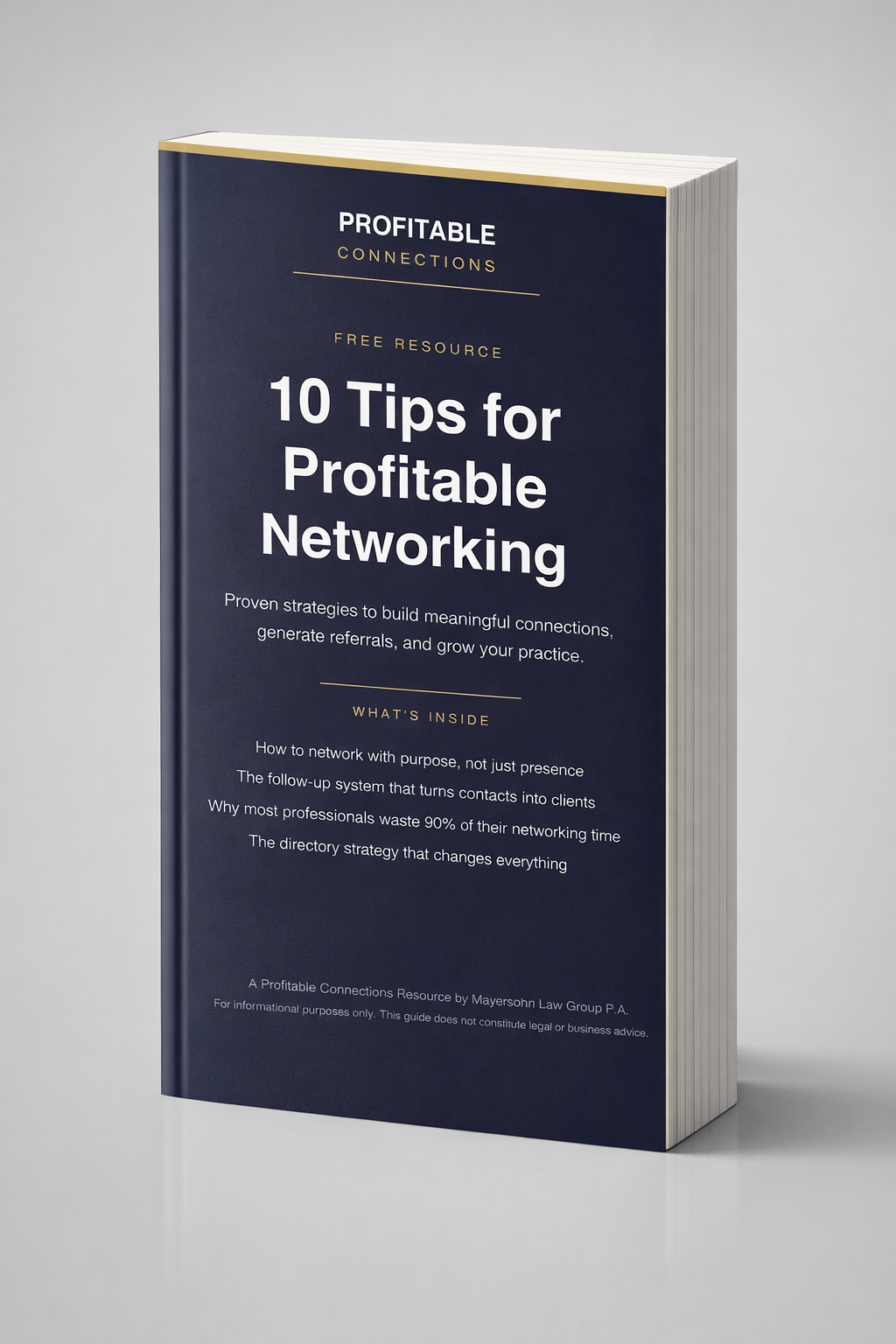
Free Guide: 10 Tips for Profitable Networking
Proven strategies to build meaningful connections, generate referrals, and grow your practice. Whether you attend our events or not, these tips will change how you network.
Get the Free GuideJoin Our Community
Stay connected between events. Join our WhatsApp and Facebook groups to share referrals, ask questions, and build relationships with South Florida professionals.
Business Professionals
For all business owners, executives, and professionals looking to build referral partnerships across South Florida.
Attorneys
Exclusively for attorneys building cross-practice referral partnerships with other legal and financial professionals.
Put This Into Practice at Your Next Event
Your ideal referral partners are already attending Profitable Connections events across South Florida. Stop searching and start meeting them through facilitated introductions.
Find an Event Near You