
What Is Referral Networking?
Referral networking is the deliberate practice of building professional relationships with people who serve the same clients you do — in a non-competing capacity — so that you can exchange qualified client introductions over time. Unlike general networking, which focuses on meeting as many people as possible, referral networking is strategic. The goal is not to collect business cards. The goal is to identify a small number of professionals who are in a position to send you business, and to build enough trust with those people that referrals flow naturally in both directions.
For attorneys, financial advisors, CPAs, real estate professionals, and other service providers, referral networking is the single most reliable way to generate new business without spending money on advertising or cold outreach. Studies consistently show that referred clients convert at rates between 50% and 70%, compared to 2% to 5% for cold leads. The reason is simple: when someone you trust tells you to call a specific professional, you are far more likely to follow through — and far less likely to price-shop.
How Referral Networking Differs from General Networking
Most people think of networking as attending an event, shaking hands, exchanging business cards, and hoping something comes of it. That is general networking, and it is largely a waste of time for established professionals. The conversion rate on random introductions is extremely low because there is no shared context, no trust, and no reason for either party to follow up.
Referral networking is fundamentally different in three ways:
It is targeted. You are not trying to meet everyone in the room. You are trying to identify the specific professionals whose client base overlaps with yours. An estate planning attorney, for example, is looking for wealth managers, CPAs, and insurance professionals — people who advise the same high-net-worth clients on complementary issues.
It is relational. A single meeting is not enough. Referral networking requires building genuine trust over multiple interactions. You need to understand the other person's practice, know what kind of clients they serve well, and feel confident that they will take care of anyone you send them. This takes time, and it takes consistency.
It is reciprocal. The most productive referral relationships are two-way streets. If you only receive referrals and never give them, the relationship will dry up. Referral networking works when both parties are actively looking for opportunities to help each other.
Why Referrals Convert at Higher Rates
The psychology behind referral conversions is well-documented. When a trusted professional recommends you to their client, three things happen simultaneously. First, the client arrives with pre-built trust — they believe you are competent because someone they already trust said so. Second, the client has a real need — they were not browsing a directory or clicking an ad, they were told specifically that you can solve their problem. Third, the competitive pressure is low — when someone is referred to you by name, they are far less likely to call three other providers for quotes.
This is why a single strong referral partner can be worth more than an entire marketing budget. One CPA who sends you two estate planning clients per quarter is generating more revenue than most digital advertising campaigns — and the client quality is significantly higher because they arrive pre-sold.
The Referral Networking Cycle: Give, Receive, Reciprocate
Effective referral networking follows a predictable cycle that most professionals never learn because no one teaches it. The cycle has three phases, and skipping any one of them will stall your results.
Phase 1: Give first. The fastest way to build a referral relationship is to give a referral before you ask for one. When you refer a client to another professional, you demonstrate two things: you have clients worth referring, and you are willing to trust the other person with them. This creates a sense of reciprocity that is nearly impossible to manufacture any other way. Look for opportunities to make introductions, recommend services, or connect people in your network with professionals who can help them.
Phase 2: Receive with gratitude. When a referral partner sends you a client, how you handle that referral determines whether you will ever receive another one. Follow up immediately. Communicate with the referring professional about the outcome. Thank them specifically and personally. Many professionals receive referrals and then vanish into the work, leaving the referring partner wondering whether the introduction was valuable. That silence kills future referrals.
Phase 3: Reciprocate consistently. After you receive a referral, actively look for an opportunity to send one back. This does not need to happen immediately, but it does need to happen. Keep a mental — or written — list of the clients and contacts who might be a good fit for each of your referral partners. The professionals who build the strongest referral networks are the ones who are always thinking about how to return the favor.
How to Build a Referral Network from Scratch
If you are starting from zero, the process is straightforward but requires discipline. Begin by identifying the professionals who serve your ideal clients in a non-competing capacity. If you are a financial advisor, your ideal referral partners might include estate planning attorneys, CPAs, and insurance agents. If you are a real estate agent, you are looking for mortgage lenders, home inspectors, and attorneys who handle closings.
Next, find ways to meet those professionals in person. This is where most people stall. They know who they want to meet but have no efficient way to get in front of them. You can attend industry events, join professional associations, or — far more effectively — attend facilitated networking events where introductions are made for you based on professional compatibility.
Once you have made an initial connection, the real work begins. Schedule a one-on-one coffee or lunch. Learn about their practice in detail. Share what your ideal client looks like. Find common ground. Then follow up consistently — not with a sales pitch, but with genuine engagement. Share an article that is relevant to their practice. Introduce them to someone in your network. Refer a client when the opportunity arises. Trust builds through repeated, positive interactions, and referrals follow trust.
Common Mistakes in Referral Networking
Asking too soon. The most common mistake is asking for referrals before you have established trust. If you meet someone at an event and immediately ask them to send you clients, you will come across as transactional. Referral relationships require a foundation of mutual knowledge and respect. Build the relationship first, and the referrals will follow. For practical advice on how to handle this, read our guide on how to ask for business referrals without being awkward.
Spreading too thin. Another mistake is trying to build referral relationships with too many people at once. You do not need 50 referral partners. You need 5 to 10 who are genuinely aligned with your practice and committed to the relationship. Depth matters more than breadth.
Neglecting follow-up. You meet someone promising at an event, exchange contact information, and then never follow up. This happens constantly, and it is the single biggest waste of networking time. The connection you made at the event is a starting point, not a finished product. Without follow-up, it is worthless.
Keeping score too tightly. Referral relationships are not perfectly balanced ledgers. Some months you will give more than you receive. Some quarters it will reverse. If you start tracking every referral and demanding exact reciprocity, you will poison the relationship. Trust the process, give generously, and the math will work out over time.
How Facilitated Events Accelerate the Process
The biggest bottleneck in referral networking is the introduction itself. How do you get in front of the right people? Open networking events are inefficient because you are left to wander the room and hope for the best. Most of the conversations you have at a traditional mixer will be with people who are irrelevant to your practice.
Facilitated networking removes that bottleneck entirely. At a facilitated event, the organizer learns about your practice, your ideal referral partners, and the types of clients you serve — before the event. Then, during the event, you are introduced directly to the people who are most likely to become productive referral partners. No wandering. No small talk with strangers. Every conversation has context and purpose.
Profitable Connections has hosted over 100 facilitated networking events across five South Florida locations, and the results speak for themselves. Professionals who attend consistently report building referral partnerships within their first two to three events — a timeline that would take six months or longer through traditional networking. The difference between facilitated and traditional networking is not incremental. It is transformational.
Getting Started
Referral networking is not complicated, but it does require intentionality. Start by identifying five professionals you would like to build referral relationships with. Attend an event where you can meet them. Give before you ask. Follow up consistently. And if you want to accelerate the process, attend a facilitated event where the introductions are handled for you.
The professionals who build the most successful practices are almost never the ones who spend the most on marketing. They are the ones who build the deepest referral networks. That work starts with a single conversation — and a commitment to giving first.
Frequently Asked Questions
How long does it take to build a referral network?
Most professionals begin seeing their first referrals within 60 to 90 days of consistent effort. However, building a mature referral network that generates predictable revenue typically takes 6 to 12 months. The timeline accelerates significantly when you attend facilitated networking events where introductions are made for you, rather than relying on chance encounters at open mixers.
What industries benefit most from referral networking?
Professional services industries benefit most from referral networking because they rely on trust and personal recommendations. Attorneys, CPAs, financial advisors, real estate professionals, insurance agents, and business consultants all thrive when they build referral partnerships with complementary professionals. Any industry where the client relationship is high-value and long-term will see outsized returns from referral networking.
How is referral networking different from affiliate marketing?
Referral networking is relationship-based and built on mutual trust between professionals who serve overlapping client bases. There is no tracking link or commission structure — referrals happen because one professional genuinely believes the other will serve their client well. Affiliate marketing, by contrast, is transaction-based and typically involves a financial incentive for each referral. Referral networking produces higher-quality leads because the recommendation comes from a trusted advisor, not a paid promotion.
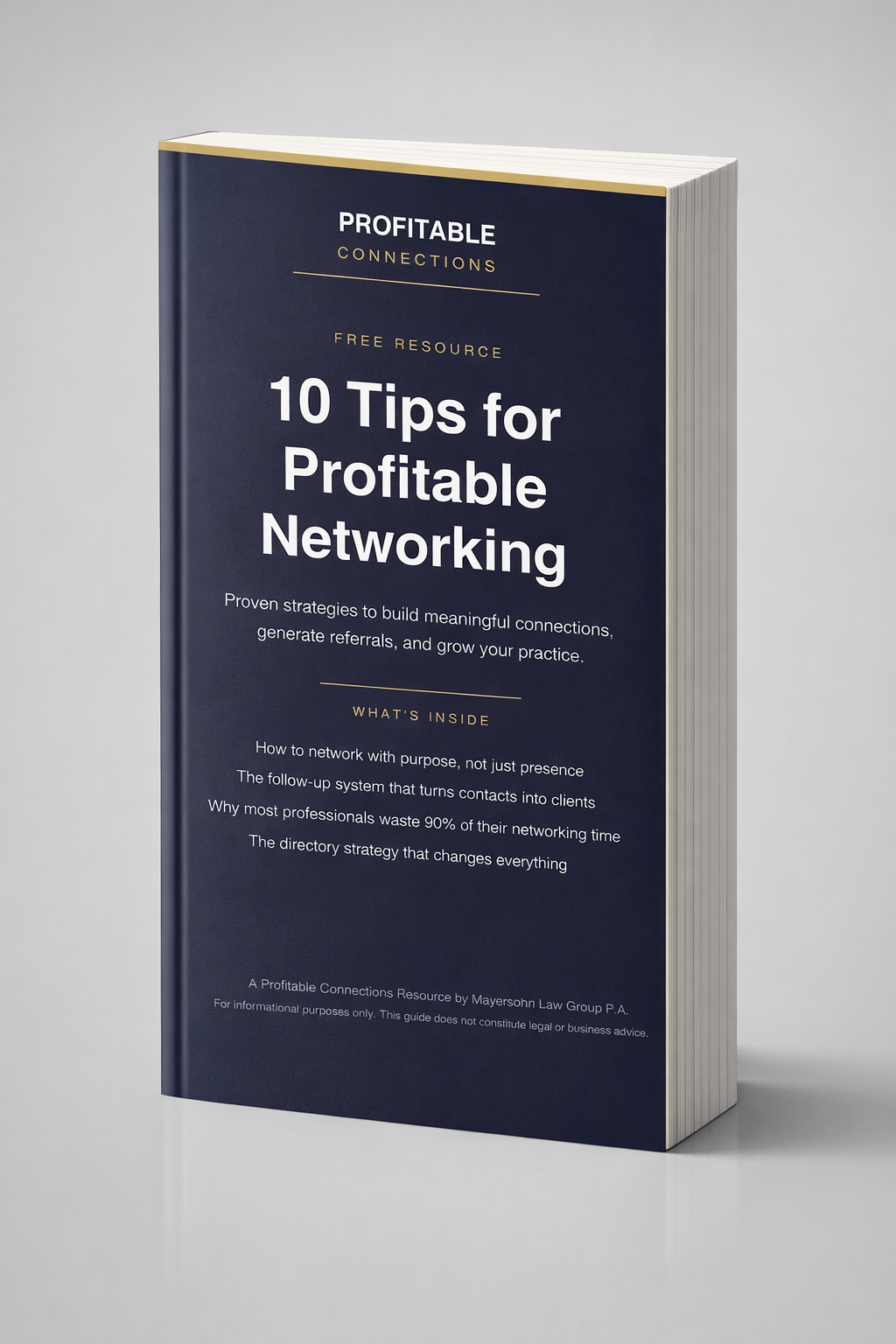
Free Guide: 10 Tips for Profitable Networking
Proven strategies to build meaningful connections, generate referrals, and grow your practice. Whether you attend our events or not, these tips will change how you network.
Get the Free GuideJoin Our Community
Stay connected between events. Join our WhatsApp and Facebook groups to share referrals, ask questions, and build relationships with South Florida professionals.
Business Professionals
For all business owners, executives, and professionals looking to build referral partnerships across South Florida.
Attorneys
Exclusively for attorneys building cross-practice referral partnerships with other legal and financial professionals.
Put This Into Practice at Your Next Event
Stop reading about referral networking and start doing it. Profitable Connections facilitates introductions at events across South Florida so you leave with real referral partners, not just business cards.
Find an Event Near You